When Wine Tastes Best
- 4.6
- Rating
- 10.00K
- Installs
- Free
- Price
 Analysis by App-foxy
I approached When Wine Tastes Best as a practical companion for wine drinkers who want to connect their tasting plans with biodynamic and lunar calendar ideas. It is a free Food & Drink app from Floris Books, and its purpose is much narrower than that of a general wine encyclopedia or shopping assistant. You will not open it to learn every grape variety, compare bottle prices, or build a cellar inventory. You open it to check the calendar before deciding when to taste, serve, or revisit a wine.
That focused purpose is both its appeal and its main limitation. I found the concept easy to understand, but it rewards users who already have some curiosity about biodynamic timing. If you are interested in whether a bottle may show differently on one day than another, the app gives that question a dedicated place. If you simply want conventional food-and-wine advice, the usual wine reference app will probably feel more immediately useful.
How the calendar fits into real wine routines
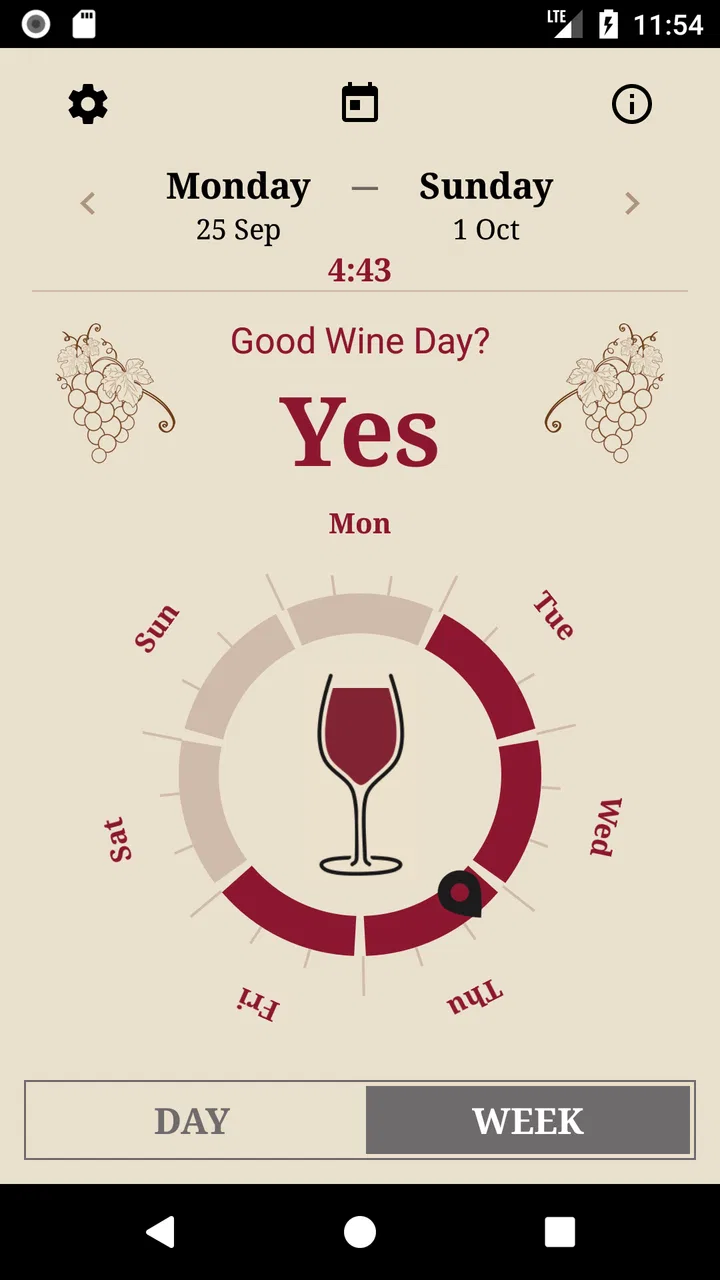
The most natural way to use this app is not as something you stare at every day, but as a planning tool. Imagine opening a bottle for friends on the weekend, arranging a small tasting, or trying to judge whether a wine has developed since the last time you drank it. Instead of choosing a date only because everyone is available, you can also consult the calendar and see whether it suggests a more favorable tasting period.
You May Also Like

 Pandora - Music & Podcasts
Pandora’s Music Is Easy to Start, but Harder to Recover
Pandora’s strength is its low-effort path from a seed to a station. Its weak spot is how much confidence it asks you to place in connection, setup, and quiet recovery.

 8 Ball Pool
 Is Built on Rivalries, Rematches, and Routine
A close look at the rivalries, rematches, shared routines, and unanswered safety questions that turn a quick pool match into a persistent mobile community.

 Samsung Music
’s Quiet Strength Is Playing What You Already Own
Its reach comes less from spectacle than from dependable access to a personal library. That simplicity is both the app’s strongest retention engine and its ceiling.

 AccuWeather: Weather Radar
AccuWeather Review: A Quick, Clear Forecast for Everyday Decisions
For everyday plans, the best forecast is the one you can understand quickly. AccuWeather makes rain timing, radar, and local conditions easy to act on, with a few trade-offs.

 Hill Climb Racing
Why Hill Climb Racing Still Turns Crashes Into One More Run
A tiny car, a bumpy hill and one more upgrade: Hill Climb Racing keeps resurfacing because its simple chaos makes every near-miss feel personal.

 AliExpress - Shopping App
AliExpress Makes Global Shopping Feel Personal, but Shoppers Bear the Risk
AliExpress turns a global marketplace into a pocket-sized discovery engine. Its reach is useful, its shopping loop compelling, and its trade-offs easy to miss.
More From Our News Desk
View All News


That makes the app particularly interesting for people who buy bottles to drink over time. A casual drinker may check it before dinner and move on. Someone with a few special bottles can use it more deliberately: note the planned occasion, check the calendar beforehand, then taste with the date in mind. I would not treat the calendar as a guarantee of quality, but it can add structure to an otherwise subjective activity.
The app’s short store description, “When Wine Tastes Best,” captures the central question without turning it into a promise. In my view, that restraint matters. Wine is affected by serving temperature, glass shape, storage, food, mood, and the condition of the bottle. A lunar calendar cannot replace those basics. What it can do is offer another variable for people who enjoy observing patterns.
There is also a useful distinction between using the calendar to decide whether to open a bottle and using it to interpret the result afterward. I prefer the first approach when possible. If you check the date before tasting, you are less likely to use the calendar as an explanation for every disappointing glass. I would also write down what I actually noticed rather than relying only on the app’s recommendation. That turns a belief into a personal tasting experiment.
What I would do before opening a bottle
My practical workflow would be simple. First, I would make sure the wine has been stored properly and is at a sensible serving temperature. Next, I would check the calendar and choose whether the bottle is worth opening that day or saving for another occasion. Finally, I would taste it without trying to force a conclusion. This order prevents the calendar from distracting from the fundamentals of wine service.
A useful refinement is to compare similar bottles rather than making a judgment from one isolated tasting. If you have two bottles of the same wine, you could open them on different suitable occasions and record the difference. That is one of the more interesting ways to get value from this app, because the calendar becomes part of a repeatable routine rather than a decorative daily prediction.
I would also avoid using it to cancel important social plans. If friends are visiting on a date that the calendar does not favor, the social occasion still matters more. The app is best treated as a guide for optional tastings, cellar planning, and curiosity—not as a rule that dictates every glass.
Speed, stability, and the experience of checking it
Because this is a calendar-focused app rather than a media-heavy service, my expectations for speed are modest and reasonable. The core task should be quick: open the app, identify the relevant date, and understand what the calendar is indicating. It does not need the kind of rapid scrolling, live interaction, or content loading expected from a streaming or shopping platform.
That simplicity is valuable during a real tasting. I do not want to interrupt a meal with a complicated search through articles or a long setup process. A focused calendar can be checked before guests arrive, while deciding which bottle to bring to the table, or when planning a quiet comparison at home. The less time spent navigating, the more attention remains on the wine itself.
At the same time, the app’s usefulness depends on clarity more than raw speed. A calendar can open quickly and still feel slow if its symbols, labels, or recommendations require too much interpretation. New users should give themselves a little time to understand how the dates are presented rather than assuming that the first screen explains everything. Once the logic makes sense, repeated checks should feel more natural.
I would not choose this app for heavy information retrieval. If your question is “Which glass should I use?” or “What food pairs with this grape?”, a dedicated wine education resource will answer more directly. This app’s strength is the date-based decision, so its performance should be judged by how quickly it gets you to that decision—not by how much unrelated information it contains.
When heavier use becomes worthwhile
The most demanding use case is not a single check but repeated comparison. A serious enthusiast might consult the calendar before several tastings, revisit dates while planning a wine club session, and keep personal notes outside the app. That workflow makes the app part of a broader process, and it also exposes its limits: the calendar can guide timing, but your own records are needed to track bottles, impressions, and outcomes.
For a group tasting, I would check the relevant dates in advance and prepare the bottles separately. This avoids passing a phone around during the event and keeps the conversation focused. The app works better as preparation than as the centerpiece of the gathering. Its role is to help select the timing; the tasting itself still depends on the people, wines, and conditions in the room.
Resource demands should also be considered in practical terms. A narrowly focused calendar is unlikely to be the sort of app that requires constant attention, but I would still avoid assuming that it replaces every other wine tool. If you need cellar management, barcode scanning, detailed tasting notes, or broad reference material, you will probably end up using another app alongside it. That is not necessarily a flaw, but it means this is a specialist tool rather than an all-purpose wine companion.
Reliability and how much confidence to place in it
Reliability here has two meanings. The first is technical: whether the app opens and presents its calendar consistently. The second is interpretive: whether you should trust the calendar as a decisive measure of wine quality. I am more comfortable treating it as a stable reference point than as an objective test instrument.
The app has been available since October 2017 and currently carries version 1.5.13. That gives it the profile of an established, maintained product rather than a brand-new experiment. Its average rating is 4.6 from around 67 ratings, which suggests that the people who find the concept relevant generally respond well to it. The audience is still specialized, so I would read that reception as evidence of usefulness for its niche, not as proof that every wine drinker will enjoy it.
Its reach is also meaningful without being enormous: it has passed 10 thousand installs. That fits the subject matter. A biodynamic and lunar calendar for wine drinkers is naturally more focused than a mainstream recipe or restaurant app. The smaller audience does not make it untrustworthy, but it does reinforce the point that you should know what kind of tool you are downloading.
For recovery after an interruption, my advice is to use it as a quick reference before the tasting rather than depending on it at the exact moment a bottle is opened. If your phone is busy, your connection is inconvenient, or the app needs to be reopened, the wine itself is not ruined. Check the date earlier, make a note of the planned occasion, and keep the tasting moving. This is a low-stakes app, so a little preparation removes most of the practical friction.
I would also keep expectations realistic about repeatability. Even if the calendar points to a favorable day, bottles can vary, corks can fail, storage can be uneven, and personal perception changes. The most reliable way to use the app is to combine its calendar with ordinary tasting discipline. Serve comparable wines under similar conditions, avoid making judgments after one sip, and record what you notice before looking for an explanation.
Where the app is convincing—and where it is not
The app is convincing as a way to make tasting more intentional. It gives enthusiasts a reason to plan, wait, compare, and pay closer attention. That can improve the experience even for someone who remains uncertain about lunar influence, because careful tasting is valuable in its own right.
It is less convincing if you expect scientific certainty, detailed wine education, or a prediction that removes ambiguity. The calendar should not overrule a bottle that smells faulty, a wine served too warm, or a meal that clashes with it. Those practical factors are more immediate and should come first.
This is also why I would not recommend it to someone who wants an objective buying decision. If your priority is finding the best-value bottle, reading broad user reviews, or checking availability, a shopping-focused service is a better fit. The app is for timing and observation, not purchasing confidence.
Device limits, cost, and who should use it
The minimum operating-system requirement is Android 5.0, so the app is accessible to users with older Android devices that still support that platform. That is helpful for anyone who keeps a spare phone in the kitchen or cellar, although compatibility alone does not guarantee that every old handset will feel equally comfortable. Screen size, battery condition, and general device responsiveness can still affect the experience.
Since the app is free to install, it is easy to try without committing money upfront. There are in-app purchases ranging from $1.49 to $7.99 per item, so I would look carefully at what each optional purchase adds before paying. The free entry point is useful for testing whether the calendar fits your own beliefs and habits. If you only plan to check it occasionally, you may decide that the basic experience is enough.
The mature age rating of 17+ is worth noticing before installation, especially for families sharing a device. The subject is wine, so that rating is not surprising, but it means this is clearly aimed at adult users rather than being a general family food app.
Floris Books is the developer, and the app’s identity feels closely tied to its specialized subject. I would recommend it to a wine enthusiast who enjoys biodynamic ideas, keeps bottles for particular occasions, or wants a more deliberate tasting ritual. It is also suitable for someone who likes testing claims personally and is willing to keep notes rather than accepting every recommendation automatically.
I would skip it if you want recipes, restaurant discovery, cellar organization, or a complete beginner’s course. I would also skip it if the lunar-calendar approach already feels uninteresting to you. There is no reason to force a niche tool into a routine it was not designed to support. A conventional wine reference app will be more useful for learning terminology, pairing food, and choosing bottles.
Three ways to get more from a narrow tool
Use it to plan a controlled comparison. Choose two similar occasions, prepare the wines in the same way, and write down your impressions before discussing whether the calendar seemed meaningful. This turns a quick date check into a personal experiment.
Separate calendar advice from bottle condition. If a wine tastes poor, check serving temperature, storage, glassware, and possible faults before blaming the date. That habit keeps the app from becoming a shortcut for avoiding honest tasting.
Check it before social events, not during them. Decide in advance which bottle you might open, then leave the phone aside. The app adds more value as a planning aid than as a distraction at the table.
These approaches also answer a practical question many new users have: do you need to understand biodynamic wine deeply before using it? I do not think so. You can begin with simple date checks and learn through observation. However, the more seriously you take the calendar, the more useful it becomes to understand that it is one influence among many, not a replacement for tasting skill.
My performance verdict after living with the idea
When Wine Tastes Best succeeds because it stays focused. It offers a specialized calendar for adult wine drinkers and gives them a simple way to plan tastings around biodynamic and lunar timing. The free starting point, modest device requirement, established release history, and strong average rating make it easy to explore for the right audience.
My main reservation is not about speed or technical ambition; it is about interpretation. The app cannot tell you whether a bottle is sound, whether it suits your meal, or whether your guests will enjoy it. It also should not replace a wine journal, cellar tool, or educational reference. Its value appears when you use it alongside those habits, especially if you enjoy comparing experiences over time.
For me, the best description is a small planning tool for curious wine drinkers. It is unlikely to become essential for everyone, but it can make opening a special bottle feel more deliberate. If you are comfortable treating its guidance as something to test rather than obey, the app offers a distinctive way to organize your tasting routine. If you want immediate practical wine advice, choose a broader alternative instead.
Overall, I would recommend giving it a try if the idea of lunar timing genuinely interests you. Start with the free experience, use it before—not during—your tastings, and keep your own notes. That approach lets you judge its usefulness honestly while preserving the simple pleasure of drinking wine without turning every glass into a technical verdict.
FAQs for When Wine Tastes Best
01What is When Wine Tastes Best?
When Wine Tastes Best is an app designed to help wine enthusiasts identify favorable times for tasting, opening, or purchasing wine. It presents wine-related timing information in a simple format, making it useful for both beginners and experienced drinkers. The app is mainly an informational companion rather than a platform for ordering wine or replacing professional tasting advice.
02How does When Wine Tastes Best determine the recommended times?
The app uses its built-in wine timing guidance to indicate periods considered more suitable for enjoying wine. Depending on the version and device, recommendations may be organized by dates, lunar cycles, or other wine-related indicators. These suggestions should be treated as traditional or general guidance, not as guaranteed results, since personal taste, storage conditions, serving temperature, and the individual bottle can significantly affect the experience.
03Is When Wine Tastes Best suitable for beginners?
Yes. The app is relatively approachable for people who are new to wine because it focuses on clear recommendations instead of requiring advanced knowledge of grape varieties, regions, or tasting terminology. Beginners can use it as an additional reference when planning a tasting, while more experienced users may appreciate having a quick way to check suggested dates. It is best used alongside personal judgment.
04Does When Wine Tastes Best work offline?
Offline availability may depend on the app version and the information being viewed. Basic content that has already been loaded may remain accessible without an internet connection, but updates, refreshed calendars, notifications, or newly published information could require connectivity. Before relying on it while traveling or in a cellar with limited reception, open the app in advance and check which features continue working offline.
05Is When Wine Tastes Best free to download and use?
The download and available features can vary between the Android and iOS versions, as well as between different releases of the app. Some editions may be free, while others can include advertising, optional purchases, or subscription-based features. It is worth checking the current store listing before installing, especially the pricing section, permissions, privacy details, and whether any advanced recommendations require payment.
Pros
- Simple interface makes tasting notes quick to record.
- Useful for planning wine purchases around meal occasions.
- Helps compare personal preferences across different wines.
- Suitable for both beginners and casual wine enthusiasts.
- Lightweight experience that is easy to browse on mobile.
Cons
- Wine recommendations may feel limited for advanced collectors.
- Some information can depend on regional wine availability.
- Personal taste results may not always match real-world preferences.
- Could offer deeper pairing details for complex dishes.
- May provide less value to users who rarely drink wine.

When Wine Tastes Best
Gallery